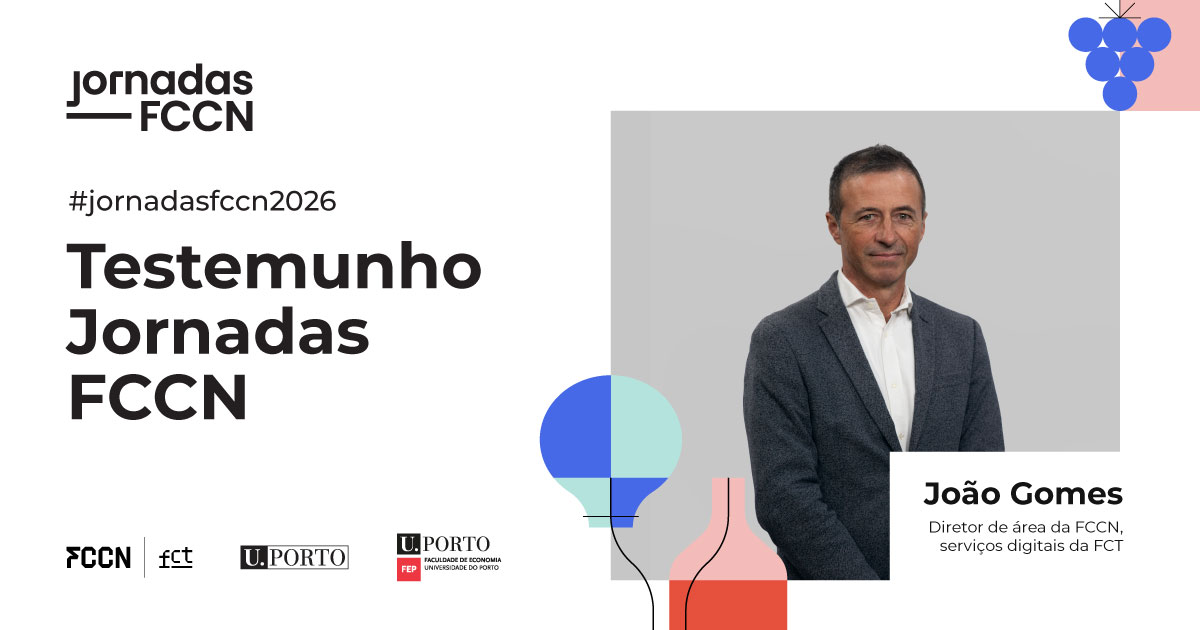
Nestas Jornadas FCCN 2026, teremos o prazer de contar com a presença, como Keynote Speakers, de Rui Lopes Campos, Responsável pela Área de Redes Sem Fios, Coordenador do Centro de Telecomunicações e Multimédia, Investigador Sénior no INESC TEC e Professor Assistente na Faculdade de Engenharia da University of Porto, and of António Murta, Fundador, Managing Partner & CEO da Pathena.
Esta primeira entrevista, partilhada abaixo, tem como objetivo primordial enquadrar e valorizar a participação de Rui Campos nesta edição, dando a conhecer o seu percurso académico e científico, bem como a experiência que tem desenvolvido nas áreas das redes de comunicações e telecomunicações, com especial enfoque em redes sem fios e sistemas de comunicação avançados.
A sua intervenção nas Jornadas FCCN 2026 está agendada para o dia 6 de maio, entre as 10h05 e as 10h30, sob o tema “Redes móveis autónomas em ambientes extremos: repensar a conectividade além das infraestruturas tradicionais”, na qual irá explorar os desafios da conectividade em ambientes exigentes e a evolução das redes para além das infraestruturas convencionais.
Posteriormente será igualmente partilhada a entrevista ao também Keynote Speaker, António Murta.
O que o motivou a aceitar o convite para ser keynote speaker das Jornadas FCCN 2026?
Aquilo que mais me motivou a aceitar o convite foi a oportunidade de partilhar o trabalho de investigação que temos vindo a desenvolver na UP e no INESC TEC na última década na área das redes sem fios para ambientes extremos. Em particular, temos explorado o uso de plataformas robóticas (ex.: drones) para criar redes de comunicações dinâmicas, reposicionáveis e com elevado grau de autonomia.
Este é um tema de crescente relevância, quer na perspetiva da exploração marítima, à superfície e em meio subaquático, quer na garantia de resiliência das comunicações em cenários adversos. Eventos recentes, como o apagão de abril de 2025 ou o “comboio” de tempestades que afetou Portugal no início de 2026, evidenciam de forma clara a necessidade de soluções mais flexíveis, ágeis e robustas. Poder trazer esta reflexão para as Jornadas FCCN foi, por isso, um fator decisivo para aceitar este convite.
Que relevância atribui a este evento, em particular para a comunidade académica e científica do Porto?
As Jornadas FCCN são muito relevantes, sobretudo por constituírem um espaço de encontro entre academia, operadores de infraestruturas digitais, a administração pública e a indústria. No contexto do Porto e da região, e da sua comunidade académica e científica, este evento tem um papel particularmente relevante ao promover a partilha de conhecimento e a criação de pontes entre investigação, ensino e aplicação prática do conhecimento.
Do ponto de vista de quem está simultaneamente envolvido na investigação e no ensino, as Jornadas FCCN permitem levar aos estudantes e investigadores desafios reais, associados à operação de redes de grande escala, à cibersegurança, à computação avançada e à resiliência das infraestruturas digitais. Isso é essencial para alinhar a formação básica e avançada com as necessidades e desafios do ecossistema, que poderão igualmente alimentar novos trabalhos e projetos de investigação.
Por outro lado, sendo o Porto um polo científico e tecnológico cada vez mais relevante do ponto de vista nacional e internacional, eventos como este reforçam a sua centralidade, estimulando colaborações multidisciplinares e interinstitucionais, e contribuindo para afirmar a região como um hub de inovação na área das redes e serviços digitais.
Que tipo de reflexão ou debate espera promover junto da audiência com a sua intervenção?
Com a minha intervenção, espero sobretudo estimular uma reflexão sobre novos paradigmas de conectividade em ambientes extremos, ancorada no trabalho de investigação que temos vindo a desenvolver na última década na UP e no INESC TEC.
Em particular, pretendo discutir o conceito de redes móveis autónomas suportadas por plataformas robóticas, explorando a sua capacidade de adaptação dinâmica ao contexto e de reconfiguração em tempo real. Este trabalho tem sido desenvolvido numa perspetiva interdisciplinar, cruzando os domínios de comunicações sem fios, robótica e inteligência artificial, com o objetivo de criar sistemas capazes de operar de forma autónoma em cenários onde a infraestrutura de comunicações não existe ou é insuficiente, por exemplo, no mar, num cenário de incêndio florestal ou após uma tempestade.
Um dos eixos centrais da reflexão será também o papel emergente das comunicações semânticas, enquanto abordagem que permite repensar a forma como a informação é transmitida e processada nas redes de comunicações, privilegiando o significado e a utilidade da informação em detrimento de métricas tradicionais centradas no débito ou na fiabilidade bit a bit.
Espero ainda contribuir para um debate sobre as oportunidades científicas que emergem desta convergência entre redes, sistemas autónomos e processamento inteligente de informação, e sobre como esta linha de investigação pode abrir caminho a novas gerações de sistemas de comunicações mais eficientes, resilientes e orientados à missão.
A sua apresentação propõe um repensar da conectividade para além das infraestruturas tradicionais — que perspetivas poderá vir a partilhar sobre este tema?
Na minha apresentação irei partilhar a perspetiva de que a conectividade do futuro não pode ser pensada exclusivamente como uma extensão incremental das infraestruturas atuais, mas sim como um sistema mais dinâmico, distribuído e orientado à missão.
Com base no trabalho que temos vindo a desenvolver, discutirei como redes móveis autónomas, suportadas por plataformas aéreas e marítimas, podem introduzir um novo grau de flexibilidade, permitindo criar e adaptar infraestruturas de comunicações “on-demand”, em função das necessidades específicas de cada cenário. Isto é particularmente relevante em ambientes extremos, onde a infraestrutura fixa é inexistente, insuficiente ou vulnerável.
Partilharei também a perspetiva de que este repensar da conectividade passa por integrar inteligência na própria rede, quer ao nível da tomada de decisão autónoma, quer ao nível de novos paradigmas como as comunicações semânticas, que permitem alinhar a operação da rede com os objetivos da aplicação e não apenas com métricas tradicionais.
Em conjunto, estas abordagens apontam para uma visão de redes mais adaptativas, sensíveis ao contexto e capazes de operar em condições de elevada incerteza, abrindo novas possibilidades para aplicações em domínios como o ambiente marítimo, a monitorização remota ou a resposta a desastres.